What Is 1/4 grain gold value — Complete Informational Guide (2900 Words)
Introduction
Gold (1/4 grain gold value) is one of the oldest and most cherished assets known to humanity. For thousands of years, civilizations have treasured gold for its rarity, beauty, and enduring value. Today, gold remains a cornerstone of investment portfolios, jewelry design, and stores of wealth.
While most people are familiar with gold measured in grams, ounces, and kilograms, there’s a lesser‑known measurement used especially in bullion microbars and some collectible formats: the grain.
In this article, you will learn:
- What a grain unit means in gold measurement,
- How a 1/4 grain gold value
- translates into modern weights,
- How its value is calculated, and
- Why this tiny fraction matters (and when it doesn’t) to investors, collectors, and gold buyers.
Whether you are just curious about fractional gold measurements or planning to buy micro gold bars, this in‑depth guide will give you everything you need to know.
What Is a “Grain”? Historical and Modern Meaning
Historical Origins
The word grain comes from ancient measurement systems where small seeds like barley or wheat were used as a reference for mass. This was one of the earliest ways human beings compared and weighed materials before modern scales existed.
In precious metals and ammunition, the grain survived as a unit because it provided a very small, precise measurement useful for tiny amounts.
Modern Definition in Precious Metals
In the context of gold and other precious metals:
- 1 grain = approximately 0.0648 grams.
- There are about 15.43 grains in 1 gram.
- A troy ounce — the standard unit for gold trading worldwide — contains 480 grains.
The grain is therefore a very small unit of mass, far smaller than a gram or a troy ounce, which makes it useful for measuring tiny amounts of gold.
When you hear “1/4 grain gold,” this means one‑quarter of a grain — a fraction that represents an incredibly small piece of gold when measured by weight.
Converting 1/4 Grain to Other Units
To understand value, you need to first grasp how much gold you’re talking about when you say “1/4 grain.”
Here’s how it converts:
In Grams
1 grain = ~0.0648 grams.
So 1/4 grain = ~0.0162 grams.
In Troy Ounces
A troy ounce contains 480 grains.
So 1/4 grain is about 0.00052 troy ounces.
In Practical Terms
To visualize:
- 1 gram of gold has about 15.43 grains.
- Therefore, 1/4 grain is roughly 1/60th of a gram of gold.
This extremely small amount highlights why 1/4 grain gold pieces are tiny and rarely used for traditional investment compared to larger units like grams and ounces.
How to Calculate the Value of 1/4 Grain of Gold
The value of any gold amount — large or small — depends on two main factors:
- Current gold price (spot price) per unit of weight (usually per troy ounce or per gram),
- Weight of gold in question.
Because 1/4 grain is such a small amount, its value at spot price will also be very small.
Step‑by‑Step Calculation
- Find the current market price of gold per gram.
For example, gold might be trading at around €123.87 per gram on a given day. - Multiply that price by the weight in grams.
With 1/4 grain equaling ~0.0162 grams, the basic calculation becomes: ⟶ €123.87 × 0.0162 ≈ €2.01
This means the pure gold content in 1/4 grain is roughly worth about €2 at a gold price of €123.87 per gram — assuming no premiums or fees. (Your exact number will vary with spot price.)
Because gold prices fluctuate daily based on markets, currency strength, and global trends, the value of 1/4 grain gold will change as the price per grain moves with the overall price of gold.
Spot Price vs. Retail Price: Understanding Premiums
When we talk about investment gold, two prices are important:
Spot Price
- This is the current market price for gold traded globally.
- It’s most commonly quoted per troy ounce or per gram.
- This price reflects the underlying metal value.
Retail Price
- This is the price you actually pay when buying gold bars, coins, or other products.
- It includes a premium over spot price.
Small formats like 1/4 grain gold value bars or cards usually carry very high premiums versus spot. This is because the costs of refining, packaging, assay certification, and distribution are spread over a tiny amount of gold, making the premium a higher percentage of the total cost than for larger weights.
For example:
- A 1 kg gold bar might have a premium of 2–5% over spot.
- A tiny 1/4 grain card might cost many times more than its melt value for the producer to create and certify.
This means the retail or collector price of 1/4 grain gold units can be well above the pure gold content value.
Why Do People Make 1/4 Grain Gold Bars?
Given how small and low‑value they are at spot, you might wonder: why do these even exist?
1. Collectibility
Some brands produce tiny gold cards with assay certificates, serial numbers, or collectible packaging. For collectors, ownership of different weights — even tiny ones — can have novelty appeal.
2. Marketing and Gifting
Very small gold pieces sometimes serve as:
- Gifts or promotional items,
- Educational tools to demonstrate gold value, or
- Limited collectible series.
3. Fractional Access
Though not efficient, small units can offer a symbolic entry point into gold ownership for some people. However, serious investors typically prefer larger weights with lower premiums.
Examples: What 1/4 Grain Gold Pieces Look Like
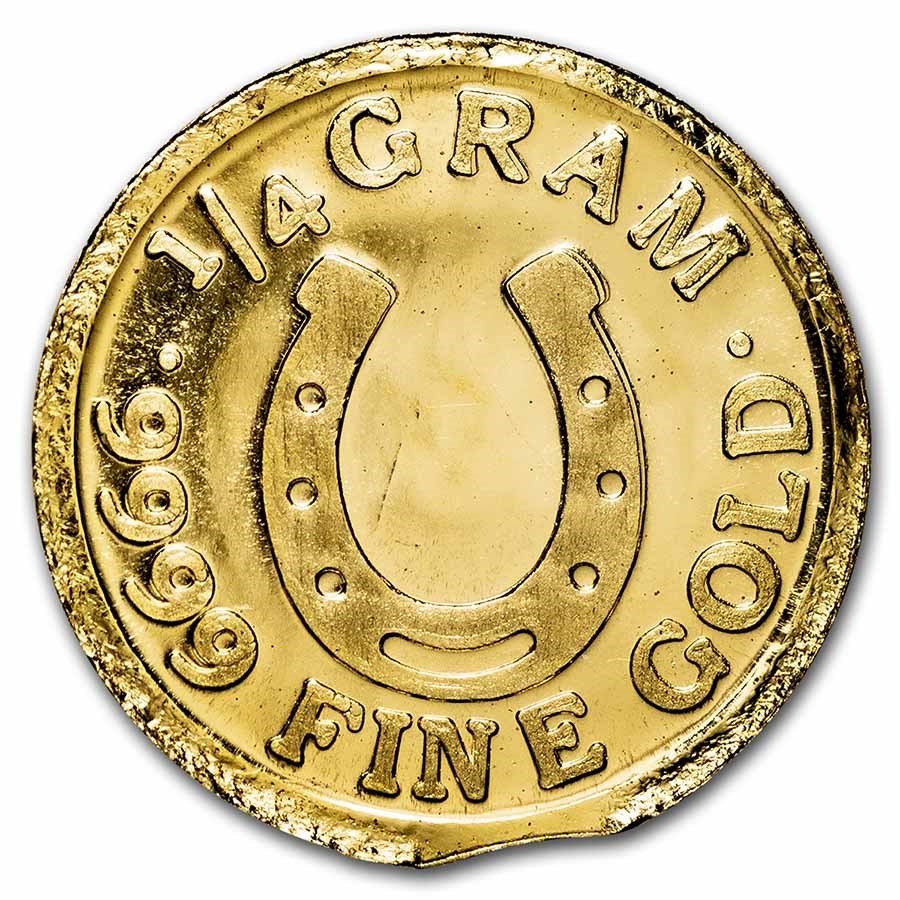
Micro gold bars weighing 1/4 grain are often sold in tiny sealed cards with certification. For example:
- A .999 fine gold 1/4 grain bar packaged with an assay card displays its weight and purity.
- Another variant from bullion suppliers includes .9999 fine gold cards marketed as collectible bullion pieces.
These pieces are extremely small — sometimes only millimeters across — and are typically not practical for large‑scale investment.
Common Misunderstandings About Grain Measurement
Because grain is an old and uncommon unit in everyday gold transactions, it often causes confusion.
Grain vs. Gram
A grain is much smaller than a gram — about 1/60th of a gram — yet people sometimes misread listings and think they’re buying a larger amount.
Grain vs. Carat
Some confuse grain weight with carat purity (e.g., 24k gold).
While “carat” indicates purity of gold alloys, grain refers strictly to weight. They are unrelated concepts.
Premiums Misconception
Just because a tiny gold card sells for $10 or more doesn’t mean the gold inside is worth that. Most of that price includes premium and packaging, not metal value.
Examining Reddit discussions, some collectors note that prices for tiny grain‑based gold bars often imply an astronomically high implied per‑ounce price, which is misleading if you think of them as bullion rather than novelty items.
Is 1/4 Grain Gold a Good Investment?
In almost all cases, no — not as a serious investment.
Reasons It’s Not Efficient for Investment
- High Premiums:
Tiny gold pieces often cost far more than their spot metal value — sometimes many times more — due to manufacturing costs. - Low Liquid Value:
When you sell, you’ll likely receive the spot value minus dealer fees, not the premium you paid. - Better Alternatives Exist:
Investors usually prefer:- Larger gold bars (e.g., 1 gram, 1/10 oz, 1 oz),
- Gold coins with recognized markets, or
- Gold exchange‑traded funds (ETFs).
These alternatives have lower per‑unit cost and more liquidity.
When 1/4 Grain Gold Makes Sense
Although it isn’t great for serious investment, 1/4 grain gold can serve some purposes:
- Collectible novelty items, especially when part of a set,
- Educational pieces to understand gold valuations,
- Gifts with symbolic value, for example in religious or cultural contexts.
Some investors even enjoy these micro pieces purely for their uniqueness — like holding a tiny bit of gold in a palm — but this is more about interest and personal enjoyment than financial gain.
Comparisons: 1/4 Grain vs. Other Fractional Gold
To see why 1/4 grain is extremely small, let’s compare:
| Gold Weight Unit | Approx. Weight in Grams |
|---|---|
| 1 Troy ounce | ~31.103 grams |
| 1 Gram | ~1 gram |
| 1 Grain | ~0.0648 grams |
| 1/4 Grain | ~0.0162 grams |
A 1/4 grain unit is therefore:
- ~1/60th of a gram,
- ~1/1920th of a troy ounce.
At typical spot prices (e.g., ~€123.87 per gram), the gold content is worth only around €2 or so.
This illustrates how tiny a 1/4 grain gold piece truly is relative to commonly traded gold weights.
Key Takeaways: Understanding the Value of 1/4 Grain Gold
Here are the most important points you should take away:
- A grain is a very old weight unit, still used in precious metals to describe tiny amounts.
- 1/4 grain ≈ 0.0162 grams of gold, an extremely small amount.
- Its raw gold value at current spot prices is only a few euros or dollars, depending on market conditions.
- Retail prices often far exceed intrinsic value, due to high premiums and packaging.
- For most investors, other gold formats offer better cost efficiency and liquidity.
Conclusion
1/4 grain gold units occupy an interesting niche in the precious metals world. They measure an extremely small fraction of gold, and their pure value at spot rates is tiny — often only a couple of euros or dollars’ worth of metal.
Yet because they exist and are sometimes packaged attractively, they can appeal to niche collectors, educators, or gift buyers. For serious investors focused on metal value, larger weights such as grams or ounces remain the practical standard.
Understanding how grain measurement works and how value is calculated helps you make informed decisions — whether you’re examining a micro gold card, checking spot prices, or planning a larger investment.
If you’d like, I can also provide a step‑by‑step calculator or pricing table for current gold prices so you can compute the exact value of any gold weight you’re curious about.